The Reinvention of the Modern Spa: Here's What It Looks Like
Wellness used to mean a quiet room and a massage table. Maybe some soft music if you were lucky. That definition has changed and it has become something much more technical. People aren’t just trying to relax anymore; they want to last longer and recover faster. The old idea of a passive spa day is slowly becoming less relevant.
Today’s travellers and residents demand results-driven wellness amenities like (infrared sauna) heat, (ice fountains) for cellular recovery, and (vitality pools) that deliver measurable skin-deep changes. Basic steam rooms now feel outdated.
At TIFC, we work closely with custom fitness and wellness spaces and see which upgrades are purely cosmetic and which redefine expectations. And in the upcoming months, that difference will be very clear.
1. The “Social” Recovery Hub with Vitality Pool
Recovery isn’t as lonely as it once was. People still appreciate quiet, but they also want company. You can attribute this to the loneliness crisis or to modern life overall. Even downtime is starting to feel social. Spas are literally tearing down walls to create spaces for shared experiences instead of isolated cubicles.
(Vitality pools) create this charm. Warm, bubbling hydrotherapy zones with jets soothing tired muscles foster natural conversations and extended stays.
That’s the charm. When a space encourages people to stick around, everyone nearby benefits, including the café and the bar just outside.
2. Contrast Therapy: Infrared Sauna & Ice Fountain
Fire and ice isn’t a fringe ritual anymore. People now understand how heat and cold affect circulation. They’ve felt the rush, the reset and the strange clarity that comes from going from very hot to very cold on purpose. Once you experience that, a random sauna session feels incomplete.
Proper flow matters. An (ice fountain) immediately after infrared sauna heat delivers rapid skin cooling and sharp relief, creating an intentional circuit for deeper recovery.
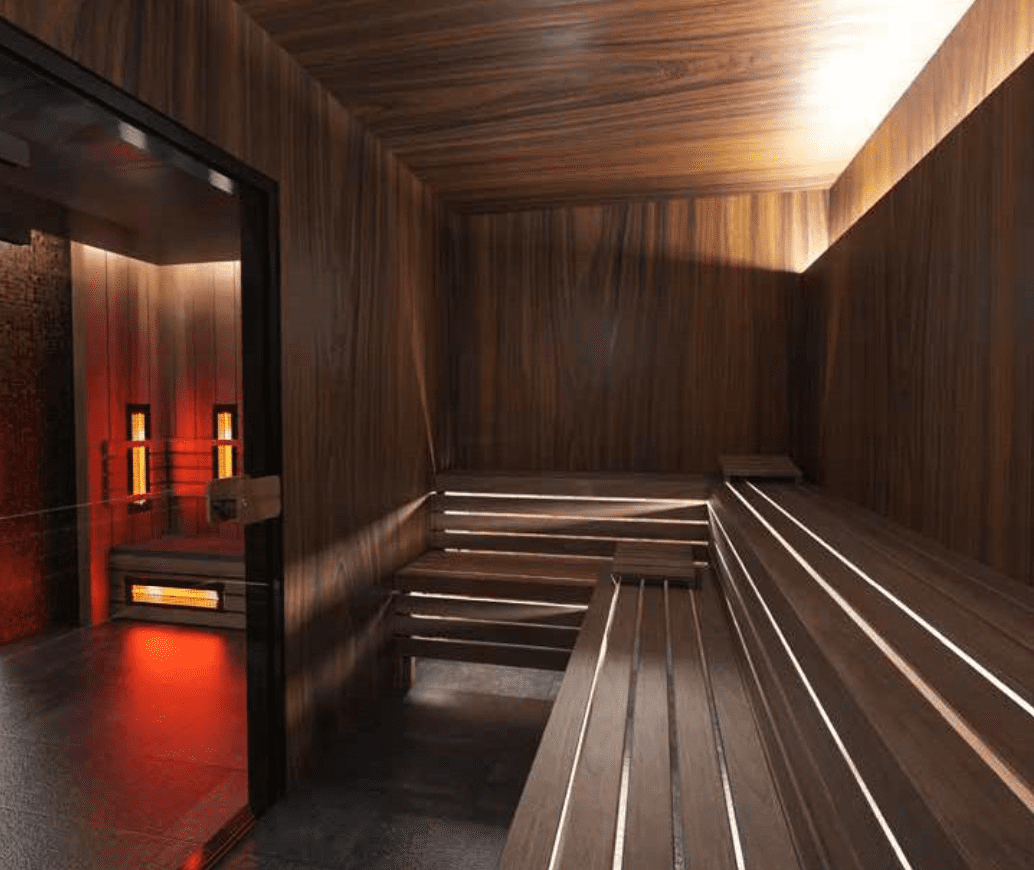
The (infrared sauna) works harder, recovery goes deeper and users actually grasp what just happened to their bodies.
Transform your facility with therapeutic recovery zones.
3. Touchless Suites: Infrared Therapy Rooms
Staffing is getting harder. Everyone in hospitality knows it. So recovery is quietly adapting. There’s more technology and less hands-on care, but not in a cold way. It’s practical and designed to work at a larger scale.
Dedicated (infrared therapy rooms) perfectly fit this change. No therapists needed, no scheduling hassles. Guests enter a private space, close the door and experience deep, restorative infrared heat.
For the business, it’s an efficient use of space that generates income without increasing payroll stress. For the guest, it feels personal and somewhat indulgent. It’s quiet and deeply restorative. There’s efficiency, yes, but still very much luxury.
4. The Lo-Fi Nature Connection
As everything gets more digital, people want the opposite. They seek less shine, less screen energy, and more connection to the earth. You can see it in the way wellness spaces are starting to look. They are warmer, rougher and evoke a sunbaked feel.
Clinical white tiles are being replaced by sand, stone and soft beige. These desert tones make a room feel grounded even before you sit down. The focus is on raw texture and imperfect surfaces as well as colours from the outdoors.
This design is subtle, but it does something important. It calms the mind so the body can actually receive the treatment, rather than just endure it.
5. The 2026 Must-Have Wellness Inventory
If you want to attract a high-end crowd in 2026, the setup has to feel intentional. It shouldn’t be flashy for the sake of it. Thought through. The right mix that conveys that this place knows how recovery works today.
- Cold therapy: Position ice fountains visibly—they cool rapidly post-heat, boost circulation and tighten tissues with a premium aesthetic.
- Hydrotherapy: Compact vitality pools with massage jets maximise small spaces; larger communal versions become emotional hubs drawing natural gatherings.
- Heat Therapy: Commercial (infrared saunas) set the baseline for deep sweating and recovery.
- Private Suites: Equipped infrared therapy rooms offer contained, purposeful privacy for discerning guests.
6. Traveler Recovery Redefined: Biohacking with Infrared Saunas
Gone are the days when the hotel was the centre of gravity for executives. Sleep is. Recovery is. People flying across time zones are trying to fix their bodies rather than numb them. Between jet lag and inflammation, no one has patience for that now.
(Infrared saunas) excel here. Deep-penetrating heat delivers rapid jet lag relief, loosens tight muscles, boosts circulation and primes better sleep-positioning hotels as go-to havens for performance-driven business travellers.
7. Family-Focused Wellness
Wellness isn’t just for grown-ups in robes. More spaces are opening up to families and it’s changing the mood for the better. Parents want their kids to grow up seeing recovery and self-care as normal, not as something you discover after burnout.
So you’re seeing gentler zones appear. Places where a parent can unwind while a child sits nearby and actually enjoys the experience instead of being bored or excluded. Wellness becomes a shared habit rather than a once-in-a-while escape.
8. Sensory-Based Design
The room itself is now part of the treatment. Not just the machines. Not just the water or the heat. Light, sound, even silence are used as tools rather than background elements.
Colour-changing lights that follow circadian rhythms. Spaces designed to prevent noise from echoing and wearing out the nervous system. Sound baths that calm everything down without anyone speaking. When all of this comes together, the body recovers differently. Recovery becomes more profound. The experience stays with you.
It’s not only about what you do in the space, but also how the space affects you while you’re present.
9. Urban Sanctuaries
City hotels are starting to realise something obvious in hindsight. They already have beautiful wellness spaces. Why should only people with room keys get to use them?
So these places are slowly becoming neighbourhood sanctuaries. With day access and memberships, locals can drop in for a soak. It turns underused areas into living, breathing parts of the business. Not just amenities, but revenue engines. And for the city crowd, it offers something rare: a calm pocket in the middle of constant motion.
Wrapping Up
Wellness in 2026 is social, science-backed, and booming—McKinsey values the industry at $2T. Leading spaces blend infrared saunas, ice fountains, vitality pools and infrared therapy rooms with human-centered design.
Heat (infrared saunas), cold (ice fountains), water (vitality pools), light, sound—intentional design drives retention and routines.
Avoid yesterday’s spas. TIFC partners globally to build essential wellness spaces with infrared saunas, ice fountains and more.
Build recovery spaces that drive retention and revenue.